Travel and Experienceswowpass korea
Cash or Card in Korea: How Much Won to Bring, and WOWPASS
Cash or card in Korea? Cards work almost everywhere, but markets and transit top-ups need won. WOWPASS fee (6,000 won), exchange hours, ATMs and subway machines.
Cash or card in Korea comes down to this: Visa and Mastercard work in most shops, so only exchange as much as markets, street food and transit top-ups need. WOWPASS, the prepaid card for foreigners, turns foreign cash into won, and the one-time registration fee is 6,000 won. Since March, Seoul subway ticket machines also take foreign cards.
Cash or card in Korea is an easy call for most visitors: you can use a card at nearly every shop, cafe and convenience store, and you only need won for traditional markets, street food and transit top-ups. If you’re arriving with foreign cash, WOWPASS is the easiest prepaid card to turn it into won, and the one-time registration fee is 6,000 won.
Korean money comes in four notes (50,000, 10,000, 5,000 and 1,000 won) and four coins (500, 100, 50 and 10 won), per the Bank of Korea. Handing a street vendor a 50,000 won note for one skewer can make for an awkward moment over change, so the rule of thumb is to keep a mix of 10,000 and 1,000 won notes.
Cash or card in Korea: what to carry
The Korea Tourism Organization says Visa, Mastercard and American Express are widely used, though a few places don’t take cards, so it suggests asking before you pay.
| Situation | Card | Cash |
|---|---|---|
| Restaurants, cafes, convenience stores, department stores | Almost always works | Not needed |
| Traditional markets, street food | Some stalls don’t take it | Safer to have some |
| Seoul subway single tickets, Climate Card | Foreign cards work (since March 2026) | Works |
| Topping up a Tmoney card | Cash is the default at convenience stores and machines | Bring some |
Whatever your card charges on foreign purchases is set by the bank or card company that issued it, not by anything in Korea. Check your own card’s foreign transaction fee before you fly.
Financial and travel analysts note that while South Korea operates predominantly cashless, maintaining a modest reserve of physical won remains essential for street-food stalls, subway card top-ups, and highway tolls.
Currency exchange in Korea: airport or downtown?
The Korea Tourism Organization says you can exchange money at a bank or a licensed exchange office, and that the airport exchange counters are the easiest option for most tourists. Bank branches usually close at 4 p.m. on weekdays, so if you land in the evening you’ll be using the airport or a private exchange office in the city.
Incheon Airport Terminal 1 hosts exchange counters for KB Kookmin, Woori, and Hana Bank; select booths in the 1st-floor arrivals hall operate 24 hours daily, while remaining branches run from 06:00 to 22:00. Terminal 2 houses parallel banking facilities across both arrival and departure levels.
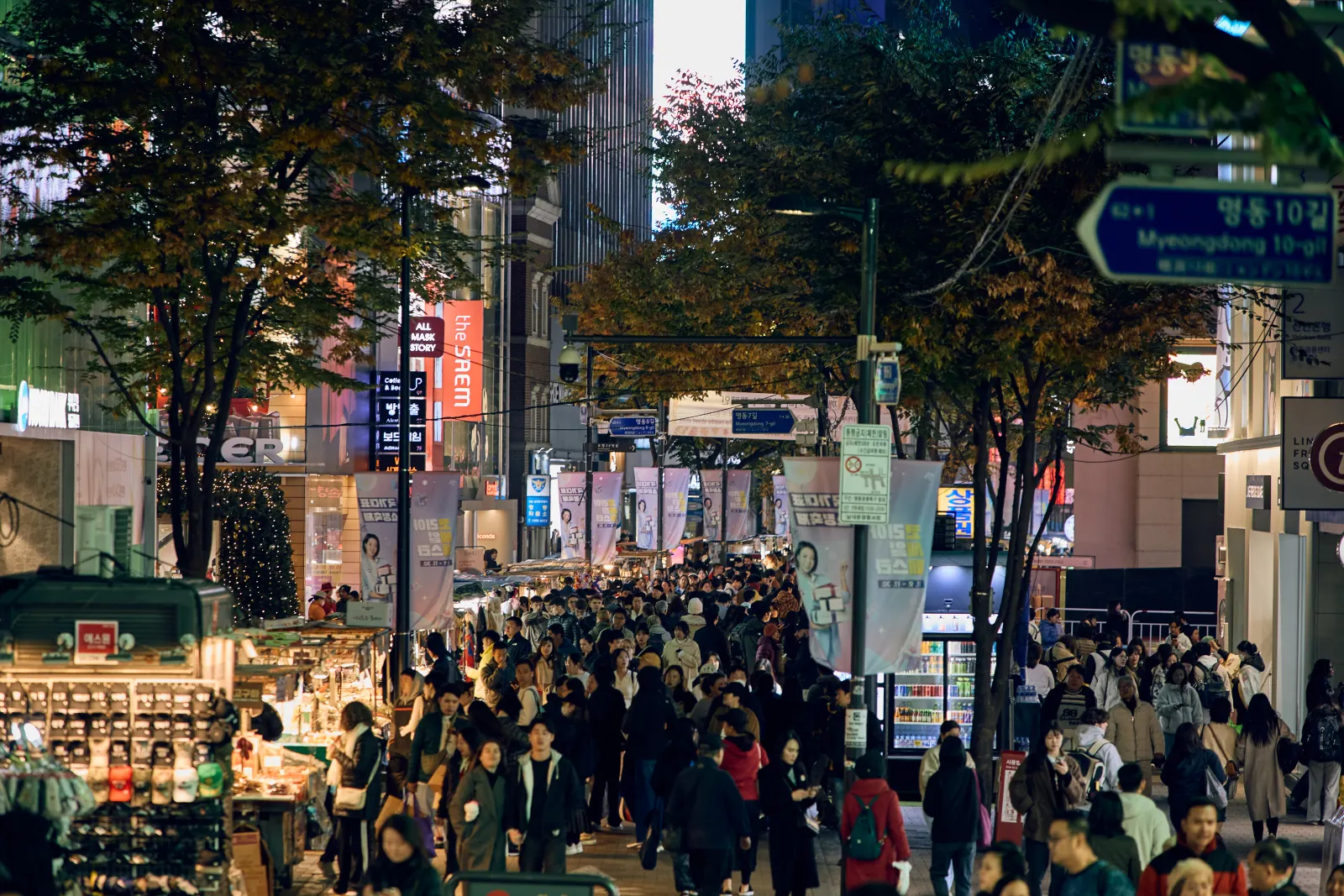
In downtown Seoul, independent currency exchange booths concentrate heavily around Myeongdong, particularly in the pedestrian alleys surrounding the Chinese Embassy (downtown exchange booth mapping). These private booths post real-time rates on electronic boards and frequently host self-service WOWPASS kiosks. While licensed private counters offer extended operating hours into the late evening, compare rates across 2–3 nearby stalls before converting large sums (Myeongdong exchange analysis).
Rates differ by place and by day. A Visit Seoul answer says banks have better rates but close around 4 p.m. That post is from 2017, though, so your best bet is to compare a few counters on the day. Many people only change what they need for day one at the airport and do the rest downtown.
Using an ATM in Korea as a foreigner
Standard domestic Korean bank ATMs frequently reject foreign cards outright; always seek out machines explicitly badged as Global ATM or displaying international payment network logos (ATM withdrawal guidance).
If the machine asks whether to charge you in won or in your home currency, choose won and decline the conversion, as the inCorea guide also advises. Fees depend on the machine and your home bank, so read the fee on the screen before you confirm. The inCorea guide adds that bank-owned ATMs are cheaper and more reliable than independent ones: “Prefer ATMs belonging to banks to independent ATMs; they cost less to withdraw and are more reliable.”
WOWPASS Korea: how it works
WOWPASS is a rechargeable card for foreign visitors. You put foreign cash into a machine, it turns into won on the card, and you pay in shops and tap it on subways and buses. The FAQ says Korean nationals can’t use it yet.
The official site says you can top up with cash in 16 currencies, with foreign cards such as Visa, Mastercard and JCB, or with PayPal. You can pick up a card from an unattended machine at the airport or in the city, or reserve one ahead. Your passport gets scanned at the machine, so bring it.
Not every machine does the same job. According to the machine list in the FAQ, the ones at the Incheon Airport Terminal 1 CU store no. 1 and the Terminal 2 CU store no. 3 only issue cards and take won cash; they don’t exchange foreign currency or let you withdraw. The machine in the Gimpo Airport international terminal’s subway passage does everything.
An older English guide on Trazy from 2025 lists what to bring to the machine: “You will need your Passport and cash (minimum 5,000won for balance top-up) to issue the card.” That minimum is for topping up; the card’s own registration fee is a separate charge, covered below.
At automated WOWPASS kiosks (kiosk issuance workflow), users select their operating language, scan their passport, and enter contact details to receive an activated card instantly. While conversion spreads carry a small markup compared to prime bank rates, the kiosk network eliminates bank teller wait times and provides immediate transit card functionality.
WOWPASS fees and limits
| Item | Amount |
|---|---|
| One-time registration fee | 6,000 won (not refunded) |
| Payments and exchange | No fee |
| Withdrawing won cash | 1,000 won each time, up to 100,000 won |
| Most you can hold on the card | 1,000,000 won |
| Topping up with a foreign card in the app | 200,000 won per top-up, 1,000,000 won per month |
Official WOWPASS terms set the card issuance fee at 6,000 won (discounted to 5,500 won with promotional advance reservations). While legacy online travel guides still quote an outdated 5,000 won figure, budget 6,000 won for on-site kiosk issuance.
Getting leftover WOWPASS money back
The only way to get it back is as won cash. At a WOWPASS machine that allows withdrawals, you take out up to 100,000 won at a time using the card registered in the app, and each withdrawal costs 1,000 won. Per the FAQ, you can’t get it back as foreign currency or have it sent to a bank account, at least for now.
So try to spend most of the balance by the day before you fly. Duty-free shops and convenience stores at the airport will take the rest. The SMBC guide says balances of 99 won or less can’t be withdrawn. If you shop a lot, don’t forget the tax refund.
Buying subway tickets with a foreign card
Seoul subway ticket machines started taking foreign cards this year. I checked the Seoul city traffic news board, and from March 17, 2026, 440 machines at 273 stations on Lines 1 to 8 accept foreign credit and debit cards for single tickets, Climate Card purchases and short-term top-ups (1, 2, 3, 5 and 7 days), with an average fee of 3.7%. Thirty-day passes aren’t included yet. None of the English guides I read this week mentioned the change, so some of them still make it sound like cash is your only option.
WOWPASS also has a Tmoney function, so you can tap on subways, buses and taxis. The shopping balance and the transit balance are separate, though, so you either move money to the transit side in the app or top up with cash at a station machine or convenience store. Money moved to the transit side can’t be moved back.
If you have an iPhone, the Tmoney app is worth a look. A Korea JoongAng Daily article from March says the iOS app now has a sign-up button for foreigners, so you can top up with Mastercard, American Express or UnionPay and add the card to Apple Wallet. Visa wasn’t supported when the article came out, and I couldn’t check whether that has changed. Our Tmoney card guide covers the regular card.
What to do on your first day
At the airport, change a little cash or get a WOWPASS, top up a transit card and head into the city. Our Incheon Airport to Seoul guide covers getting to your hotel.
Exchange hours, WOWPASS fees and limits can change, so check the official sites once more before you leave. More trip-planning posts are on the travel page.
Frequently asked questions
How much cash do I need in Korea?
Not much. The Korea Tourism Organization says Visa, Mastercard and American Express are widely used, so you only need won for places that don't take cards, like traditional markets, street food stalls and transit card top-ups.
Is the Incheon Airport currency exchange open at night?
Some counters are. Per the Incheon Airport page, a few KB Kookmin Bank and Woori Bank counters in the Terminal 1 arrivals hall on the first floor are open 24 hours, and the others run from 6 a.m. to 10 p.m. Bank branches in the city are open 9 a.m. to 4 p.m.
What are the WOWPASS fees?
You pay a one-time registration fee of 6,000 won, and it is not refunded. According to the WOWPASS FAQ there is no fee for payments or exchange, and taking won out of a machine costs 1,000 won each time.
Can I get my leftover WOWPASS balance back?
Only as won cash. You can take out up to 100,000 won at a time from a WOWPASS machine that allows withdrawals, with a 1,000 won fee. The FAQ says you can't convert it back to foreign currency or send it to a bank account.
Can I buy Seoul subway tickets with a foreign card?
Yes, since March 17, 2026. Per the Seoul city announcement, 440 ticket machines at 273 stations on Lines 1 to 8 take foreign credit and debit cards for single-journey tickets, Climate Card short-term top-ups and Climate Card purchases, with an average fee of 3.7%.
Sources
- Currency(원화 지폐와 동전, 은행 시간, 카드 사용), 한국관광공사 (accessed )
- FAQ: Where can I exchange money?, 한국관광공사 (accessed )
- Banknotes and Coins in Circulation, 한국은행 (accessed )
- Banks, Currency Exchange and ATMs(제1여객터미널), 인천국제공항공사 (accessed )
- WOWPASS 공식 사이트(충전 수단, 결제와 인출 수수료), WOWPASS(오렌지스퀘어) (accessed )
- WOWPASS FAQ(등록비, 한도, 잔액 인출, 티머니, 기계 위치), WOWPASS(오렌지스퀘어) (accessed )
- WOWPASS 사용법과 등록비 인상(2026.7.30), SMBC신탁은행 Global Compass (accessed )
- 지하철 승차권 발매기에서 해외카드 결제 가능(2026.3.16), 서울특별시 (accessed )
- Apple Pay, Tmoney allows foreigners, tourists to ride using iPhones(2026.3.19), Korea JoongAng Daily (accessed )
- 환전 어디서 하는 게 좋을까요?(2017.3.8), 서울관광재단 Visit Seoul (accessed )
- 와우패스 환전 키오스크 이용 후기(2026.9.4), 네이버 블로그 은남매 하우스 (accessed )
- 명동 사설 환전소 이용 후기(2026.8.1), 네이버 블로그 Homecoming (accessed )
- 명동(필드)_027(대표 사진), 세종학당재단, 공공누리 제1유형 (accessed )
- Pay cash vs card in South Korea: how to pay for just about everything (2026-08-24), Study International (accessed )
- How and where to exchange money into Korean Won: payment guide for South Korea (updated August 2026), inCorea (accessed )
- Complete guide to South Korea WOWPASS (2025-03-31, updated 2025-04-10; still mentions a 5,000 won minimum top-up), Trazy Blog (accessed )
- Foreign card cash withdrawals in Korea: ATM labels, fees and fallback options (2026-10-12), Korea Experience (accessed )