Travel and Experienceskorea winter travelseoul in january
Korea Winter Travel: Seoul Is -2°C in January, Sunset at 5:18
Korea winter travel: Seoul averages about -2°C in January and the sun sets at 5:18 pm. Weather by city, what to pack and what Seollal changes.
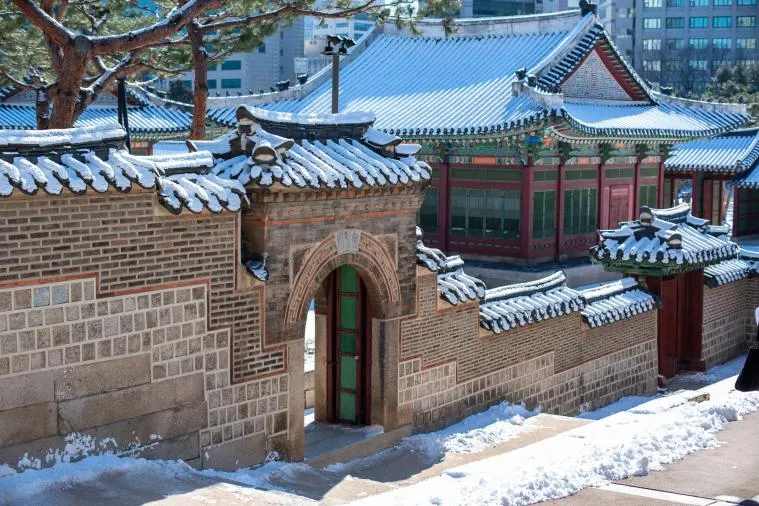
The two things to know before a Korea winter trip are the cold and how early it gets dark. Seoul's January average is close to -2°C (Korea Meteorological Administration normals) and the sun set at 5:18 pm on the winter solstice, so plan to finish outdoor sightseeing before 4 pm. Busan and Jeju are milder but windy, and Daegwallyeong in Gangwon has a normal January morning low of -12°C.
For Korea winter travel, knowing the cold and the early sunset gets you halfway there. Seoul’s January average is close to -2°C (about 28°F, Korea Meteorological Administration 1991-2020 normals), and at the end of December the sun is down by 5:18 pm.
The upside is that some things only happen in winter: the lantern lights along Cheonggyecheon, the skating rink on Seoul Plaza, ice fishing festivals and the ski resorts. What you can see depends a lot on when you come, so let’s pick dates first.
Korea in December or late November: when to go
If the cold worries you, come in late November. If you want the winter events, come in mid-December. Seoul averages over 7°C in November and drops to around freezing in December, so winter really sets in over the space of a month.
Going by last year’s Seoul Winter Festa announcement, most of the start dates fell in December.
| Event (2025-26 season) | Dates |
|---|---|
| Lotte Town Christmas Market (Jamsil) | 20 November 2025 to 4 January 2026 |
| Seoul Winter Festa (Gwanghwamun Square and 5 other sites) | 12 December 2025 to 4 January 2026 |
| Gwanghwamun Market | 12 to 31 December 2025 |
| Seoul Plaza skating rink | 19 December 2025 to 8 February 2026 |
Most of this year’s dates haven’t been announced yet. When they are, I’ll update the event pages: Seoul Winter Festa, Seoul Christmas markets and the Seoul Plaza ice skating rink.
Late November is milder and you can still catch the Jamsil Christmas market. After 20 December it’s properly cold, but the markets, lantern lights and skating rink are all open (going by last year’s schedule).
Korea winter travel weather, city by city
The same winter can mean very different coats depending on where you go. These are the Korea Meteorological Administration 1991-2020 normals, rounded: daytime high / morning low.
| City | November | December | January | February |
|---|---|---|---|---|
| Seoul | 12 / 4°C | 4 / -3°C | 2 / -6°C | 5 / -3°C |
| Busan | 17 / 8°C | 10 / 2°C | 8 / 0°C | 10 / 2°C |
| Jeju City | 16 / 10°C | 11 / 6°C | 9 / 4°C | 10 / 4°C |
| Daegwallyeong (Pyeongchang) | 8 / -3°C | 1 / -9°C | -2 / -12°C | 1 / -10°C |
Busan’s winter average is 5°C, well above Seoul’s, but KMA’s regional climate page says continental high pressure makes it windy. Jeju is warmer than the mainland but gets a lot of rain and wind. If you read only the numbers and pack light, the sea wind will change your mind fast.
In Seoul the first snow normally arrives around 20 November. December and January average six or seven days of snow each, so a week-long stay has a decent chance of at least one.
What to wear in Korea in winter
A thin thermal layer, a knit and a knee-length puffer coat will get you through Seoul. The wind is the real problem, more than the temperature itself.
On last year’s winter solstice (22 December 2025), the Seoul weather station recorded close to -6°C at 8 am, and with wind it felt below -9°C. By 3 pm it had climbed to nearly 5°C, then by 7 pm the feels-like temperature was back below zero. Dress assuming that whatever you head out in this morning is what you’ll be wearing until night.
A scarf, gloves and a hat that covers your ears help a lot. Bring hand warmers too: one for your pocket and a stick-on one for inside your shoe.
During sustained cold snaps, daily highs regularly hover below 0°C across the capital (Seoul winter conditions). High-grade thermal base layers (such as Heattech Ultra Warm) under wind-resistant outerwear are non-negotiable. Choose slip-on footwear with sturdy tread: you will remove your shoes frequently when entering traditional ondol floor-seating restaurants, tea houses, jjimjilbangs, and hanok accommodations.
Layering strategy determines both comfort and mobility (Korea winter climate playbook). Seoul’s indoor spaces—subway cars, underground malls, cafes, and museums—crank heating aggressively up to 22–24°C, creating a jarring contrast with the freezing outdoors. Wearing breathable mid-layers over fleece-lined thermals allows rapid adjustment when moving between subway stations and frigid sidewalks.
Equally important is precipitation resistance (winter packing breakdown). Wet snow mixed with pavement slush penetrates standard canvas sneakers within minutes; pair your down jacket with water-resistant insulated boots and thermal socks to maintain foot warmth during long walking circuits.
Gangwon-do is a whole different winter
Around Pyeongchang and Daegwallyeong the normal January morning low is -12°C. Seoul clothes won’t be enough there.
At high-altitude Gangwon trails like Seonjaryeong (winter alpine trail observations), severe wind chill turns even near-freezing temperatures into dangerous sub-zero exposure. Drifting snow frequently buries stairway trailheads, making crampons, gaiters, and waterproof hiking boots mandatory to prevent moisture penetration and frostbite risk.
For alpine ski and resort excursions (Pyeongchang resort packing logistics), bulky down parkas quickly overwhelm luggage capacity. Wear your heaviest padded coat on flights and express trains, reserving suitcase space for compact technical mid-layers, neck warmers, and backup thermal gear.
Ski resorts usually open from late November to early December. Last season Phoenix Park and Mona Yongpyong planned to open on 21 November, High1 on 28 November and Alpensia on 5 December, according to Asia Economy. This year’s opening dates haven’t been announced yet.
Short days: how to plan around the sunset
On last year’s winter solstice the sun rose in Seoul at 7:44 am and set at 5:18 pm, and it was dark outside by 5:47 pm (Korea Astronomy and Space Science Institute, 22 December 2025).
So do the palaces, Hanok Village and viewpoints around midday, then switch to the lantern festivals and Christmas lights after sunset. The day fits together nicely that way. Cheonggyecheon’s Seoul Lantern Festival and Busan’s Haeundae Light Festival only really come alive after dark.
To thaw out, go to a jjimjilbang (Korean spa). Visit Seoul, the city’s tourism organization, lists them as a winter option in its own English guide. A nap in one of the hot rooms gives you enough energy for one more thing that evening.
Winter-only things to do in Korea
January is peak season for ice fishing festivals. Last year’s Pyeongchang Trout Festival ran from 9 January to 9 February, and the official site says the Hwacheon Sancheoneo Ice Festival runs from 9 to 31 January 2027. There’s more in our Pyeongchang Trout Festival and Hwacheon Sancheoneo Ice Festival posts.
If you’re in Seoul on 31 December, there’s the Bosingak bell ringing and countdown. Where to stand and when to go are in the Seoul New Year’s Eve countdown post.
Seollal and fine dust: two things that can wreck a plan
The 2027 Seollal (Lunar New Year) holiday runs from Saturday 6 February to Tuesday 9 February. Seollal itself is Sunday 7 February, with 9 February as the substitute holiday.
According to a Newsis report on this year’s palace openings, in 2026 the four palaces, Jongmyo shrine and the Joseon royal tombs were free for five days of the holiday, and closed for one day right after it. Nothing has been announced for 2027, so if you’re coming around Seollal, check the Korea Heritage Service notice before you fly.
Fine dust is another winter regular. Seoul runs a fine dust seasonal management period from December to March, and over the last three years 83% of the days past the “bad” level fell in those four months. Leave a spare day to move things indoors, and pack a mask. I also looked at the UK government’s health advice, which says much the same: on days when concentrations are high, most residents stay indoors or use face masks outside.
One more thing before you fly
If you’re coming in January or February, check your entry paperwork again. The Ministry of Justice says the temporary K-ETA exemption for countries like Japan, Taiwan, the US and the UK runs until 31 December 2026. The UK Foreign Office’s entry page says the same for British visa-free travellers. Nothing has been announced for 2027 yet, so read our Korea entry requirements post and check the notice once more before you leave.
If you get lost or can’t make yourself understood, call 1330 (+82-2-1330 from abroad) for the Korea Tourism Organization’s interpreter service. You can also ask through KakaoTalk or LINE.
More on other seasons and cities is in the travel posts. And zip the puffer all the way up.
Frequently asked questions
How cold does Korea get in winter?
Seoul's January average is close to -2°C (Korea Meteorological Administration 1991-2020 normals), with a normal morning low around -5°C. In Daegwallyeong in Gangwon the January morning low is -12°C.
Is late November or mid-December the better time to go?
Late November if the cold worries you, mid-December if you want the winter events. Seoul averages over 7°C in November, so it's much milder, while last year's Seoul Winter Festa and the Seoul Plaza skating rink opened on 12 and 19 December.
What should I wear in Seoul in winter?
A thin thermal layer, a knit on top, and a knee-length puffer coat over that. On one winter morning at 8 am the wind chill dropped to about -9°C, so bring a scarf, gloves and hand warmers too.
What time does the sun set in Korea in winter?
On the winter solstice the sun set in Seoul at 5:18 pm and it was fully dark by 5:47 pm (Korea Astronomy and Space Science Institute, 22 December 2025). Try to finish palaces and walks before 4 pm.
When is Seollal in 2027?
The holiday runs from Saturday 6 February to Tuesday 9 February. Seollal itself is Sunday 7 February, and 9 February is the substitute holiday.
Sources
- 지역별 기후 특성(서울, 1991~2020 평년값), 기상청 (accessed )
- 지역별 기후 특성(강원, 대관령 1991~2020 평년값), 기상청 (accessed )
- 지역별 기후 특성(부산, 1991~2020 평년값), 기상청 (accessed )
- 지역별 기후 특성(제주, 1991~2020 평년값), 기상청 (accessed )
- Seoul, climate data 1991–2020 (기상청 평년값 인용 표), Wikipedia (accessed )
- Busan, climate data 1991–2020 (기상청 평년값 인용 표), Wikipedia (accessed )
- Jeju City, climate data 1991–2020 (기상청 평년값 인용 표), Wikipedia (accessed )
- Daegwallyeong, climate data 1991–2020 (기상청 평년값 인용 표), Wikipedia (accessed )
- 기상청 지상(종관, ASOS) 시간자료, 서울(종로구 송월동) 관측소 (2025-12-22), 기상청, 공공데이터포털 (accessed )
- 한국천문연구원 출몰시각 정보, 서울 (2025-12-22), 한국천문연구원, 공공데이터포털 (accessed )
- 2025 서울윈터페스타 개막 안내(광화문마켓, 서울광장 스케이트장 포함), 서울시 내 손안에 서울 (accessed )
- 2025 롯데타운 크리스마스마켓 개장 보도(2025.11.19), 뉴시스 (accessed )
- 스키장 2025~26 시즌 개장 계획 보도(2025.11.19), 아시아경제 (accessed )
- 서울시 초미세먼지 계절관리제 안내, 서울시 내 손안에 서울 (accessed )
- 2027년 공휴일 달력, 헤럴드경제 (accessed )
- 2026 설 연휴 4대 궁과 종묘, 조선왕릉 무료 개방 보도(2026.2.11), 뉴시스 (accessed )
- Seoul Winter Wellness (찜질방 안내), 서울관광재단 Visit Seoul (accessed )
- 1330 Korea Travel Hotline, 한국관광공사 (accessed )
- 대한민국 전자여행허가제(K-ETA) 한시 면제 기간 연장 알림(2025.12.23), 법무부 K-ETA 누리집 (accessed )
- 평창 애견동반 겨울 여행 선자령 반려견과 트레킹(2026.1.5), 네이버 블로그 견국여지승람 (accessed )
- 25개월 아기랑 겨울여행, 휘닉스 평창 2박 3일(2026.2.6), 네이버 블로그 sroodoo (accessed )
- Warm Hearts, Cold Seoul: Travelling Korea in Winter(2020.3.1), Pink Pangea (accessed )
- 눈내리는덕수궁(서울특별시 중구, 2021, 공공누리 제1유형), 서울특별시 중구, 공공누리 (accessed )
- A Guide To Winter In Korea: Snow and Ice and Everything Nice (updated 2026.1.2), The Soul of Seoul (English blog) (accessed )
- Ultimate Packing List for Korea (Winter) (2024.4.26), A Love Letter to Asia (English blog) (accessed )
- South Korea travel advice: Entry requirements, UK Foreign, Commonwealth & Development Office (gov.uk) (accessed )
- South Korea travel advice: Health (air pollution), UK Foreign, Commonwealth & Development Office (gov.uk) (accessed )